Mind and body wellness isn't some new-age concept; it’s the simple understanding that your mental state and physical health are two sides of the same coin. This isn't about treating them as separate things. It’s about recognizing they are a single, interconnected system where one is constantly talking to the other.
The Unbreakable Link Between Mind and Body
Ever felt that "butterflies in your stomach" feeling before a big presentation? That’s it. That’s the mind-body connection in action, a perfect, everyday example of how your thoughts can trigger a very real, physical response. This powerful link is the bedrock of holistic health, reminding us that being well is about so much more than just what you see in the mirror.
Think of your body as a high-tech orchestra. If the violin section—your thoughts—is screeching frantically and out of tune, the whole performance is a mess. It doesn't matter how perfectly the percussion section—your physical strength—is playing its part. To create something beautiful, every single piece has to work in harmony.
How Mental States Affect Physical Health
This connection is a two-way street. Prolonged stress and anxiety aren’t just feelings you have to push through; they manifest physically. We’ve all felt it: the chronic tension in your neck and shoulders, those stubborn headaches, or even digestive issues that pop up when your body is stuck in a constant state of high alert.
But the good news is, it works the other way, too. Positive mental states can have a massive impact on your physical health. When you actively cultivate feelings of calm, joy, or gratitude, you’re helping to regulate your nervous system, lower your blood pressure, and even give your immune system a boost. This is exactly why practices that calm the mind so often lead to feeling physically better.
Understanding this dynamic interplay makes it obvious why just treating physical symptoms often feels like you're only solving half the problem. True wellness demands a unified approach.
The Growing Focus on Emotional Well-being
This shift toward looking at the whole picture isn't just a niche trend—it's fast becoming a global priority. In the wake of the pandemic, people are focusing more on their daily well-being rather than just trying to avoid long-term illness. The numbers back this up: 28% of consumers worldwide now prioritize their emotional health for the coming year, right alongside goals like having more energy or better digestion.
And with 39% of adults globally reporting they experience significant worry, the need for effective mind-body strategies has never been clearer. If you want to dig deeper, you can read more about these cognitive and emotional health trends to get the full picture.
Ultimately, integrating mind and body practices is the most direct path to building genuine resilience. It's about creating a system where your mental clarity supports your physical vitality, and in turn, your physical strength reinforces your mental peace. That’s how you build lasting, balanced wellness.
Core Practices for Mind and Body Integration
When you first dip your toes into the world of mind-body wellness, it can feel like you’re standing at a trailhead with a dozen different paths branching out before you. Each one promises to connect your mental and physical states, but they all take a different route. Getting to know the big four—Yoga, Pilates, Mindfulness, and Restorative practices—is the best way to choose the right journey for your own goals.
Think of these practices as different toolkits for teaching your mind and body to have a better conversation. Some use the language of movement and breath, while others focus on the power of stillness and pure awareness. Let’s break them down so you can see which one really speaks to you.
Yoga: Unifying Breath and Movement
Yoga is probably the most familiar mind-body practice out there. At its heart, it’s a system of physical postures (asanas), breathing exercises (pranayama), and meditation. While the physical side builds serious strength, flexibility, and balance, yoga’s real magic comes from syncing every movement to your breath. This connection acts as an anchor, pulling your attention out of the chaotic stream of your thoughts and into the present moment.
In a typical yoga class, a teacher guides you through a sequence of poses, constantly reminding you to feel what’s happening in your body and to keep your breath steady. This isn’t just about stretching your hamstrings—it’s a direct line to calming your entire nervous system.
- Primary Focus: Synchronizing physical postures with controlled breathing to foster a meditative state.
- Key Mind-Body Benefits: Reduces stress by lowering cortisol levels, increases body awareness, and improves mental clarity and focus.
- Ideal For: Anyone looking for a practice that builds physical strength and flexibility while offering a serious dose of mental relaxation and stress relief.
Pilates: Building a Strong and Focused Core
Pilates is all about core strength, proper alignment, and incredibly precise, controlled movements. Its founder, Joseph Pilates, originally called his method “Contrology,” and that name hits the nail on the head. The whole practice is built on the idea that a strong, stable center—your core—is the foundation for every graceful and efficient movement you make.
Every single exercise demands your full concentration. You have to tune in to your form, your breath, and the exact muscles doing the work. This intense focus forges a powerful mind-body link, training your brain and body to work together with surgical precision. The result isn't just a stronger body, but a sharper, more controlled mind.
Pilates teaches you to move from your center, a principle that extends far beyond the mat. A strong core supports a focused mind, giving you more stability to handle both physical and mental challenges.
Mindfulness: Training Your Attention
Unlike yoga and Pilates, mindfulness is primarily a workout for your brain. It's the simple, yet profound, practice of paying attention to the present moment on purpose, without getting caught up in judging what you find. You can do this through guided meditations, by focusing on the sensation of your breath, or by just observing thoughts and feelings as they come and go.
The goal isn’t to have an empty mind—that’s impossible. It’s about becoming a neutral observer of your mind's activity. Practicing this consistently strengthens your ability to manage your attention and regulate your emotions. It’s like strength training for the part of your brain responsible for focus and good decision-making.
Restorative Practices: Deeply Soothing the Nervous System
Restorative practices, often a super-gentle style of yoga, are designed for one thing: deep, profound relaxation. Using a whole host of props like blankets, bolsters, and blocks, your body is completely supported in comfortable poses that are held for several minutes. The goal isn't to stretch or build strength; it's to create the perfect conditions for your body to let go of every last bit of tension.
This practice speaks directly to your parasympathetic nervous system—your body’s “rest and digest” mode. It’s the ultimate reset button, shifting you out of a state of chronic stress and into a state of healing and repair. It’s exactly what a tired mind and a burnt-out body crave.
To make it even clearer, here's a side-by-side look at how these practices stack up. Each offers a unique path to wellness, and seeing them compared can help you pinpoint which one is the best fit for you or your clients right now.
Comparing Mind and Body Wellness Practices
| Practice | Primary Focus | Key Mind-Body Benefits | Ideal For |
|---|---|---|---|
| Yoga | Breath-synchronized movement | Stress reduction, flexibility, mental clarity | Those wanting a blend of physical activity and meditative calm. |
| Pilates | Core strength and precise control | Improved posture, body awareness, mental focus | Individuals seeking to build functional strength and control. |
| Mindfulness | Present-moment awareness | Emotional regulation, reduced anxiety, better focus | Anyone looking to train their mind for greater calm and clarity. |
| Restorative | Deep relaxation and healing | Nervous system regulation, stress relief | People feeling burnt out, stressed, or recovering from injury. |
Ultimately, the "best" practice is the one that resonates most deeply and addresses a specific need. Whether it's the dynamic flow of yoga or the deep stillness of a restorative pose, each discipline offers a powerful way to reconnect the mind and body.
01 / An open slot at 19:00. Players see it live in your club’s app.
Why Integrated Wellness Is in High Demand
The whole conversation around what it means to be "healthy" is changing. For what feels like forever, fitness was a numbers game—how much you could lift, how fast you could run, what the scale said. But we're in the middle of a massive cultural shift, and the goalposts have moved from pure physical strength to a more balanced, whole-person kind of well-being.
This isn't some fleeting trend. It's a direct response to the way we live now. We're constantly connected, drowning in information, and feeling the pressure. Burnout and stress are at an all-time high, and people are finally talking openly about mental health. This has them searching for solutions that do more than just work out their bodies. They're looking for a way to quiet the noise, hit the reset button, and find some peace.
The New Consumer Expectation
Today's wellness seeker is smarter and more intentional than ever. They get that a six-pack doesn't automatically equal peace of mind. They know that real health means learning to manage stress, sharpen focus, and build emotional resilience. This has created a huge demand for services that finally treat the mind and body as the deeply connected system they've always been.
This infographic breaks down some of the core practices people are leaning on to find that balance.
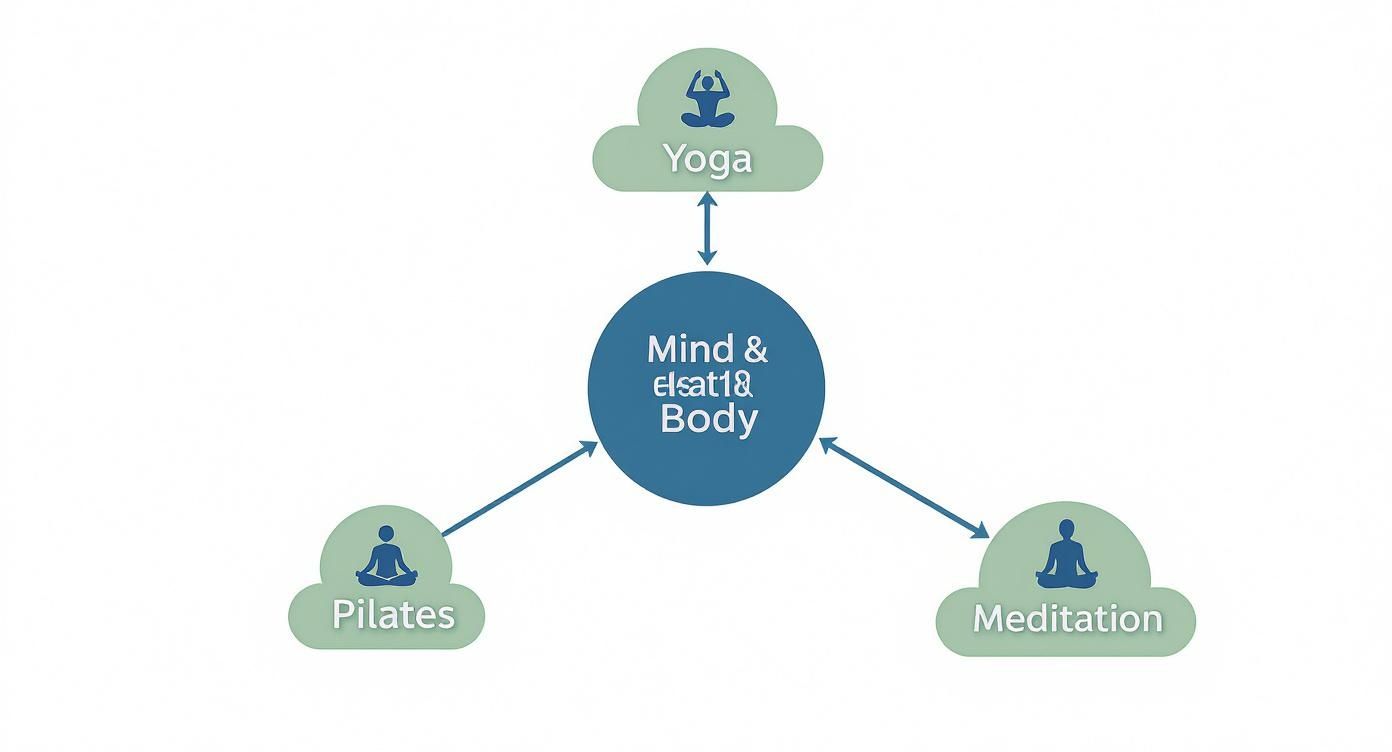
As you can see, things like Yoga, Pilates, and Meditation are right at the center of this movement. For any wellness business, ignoring this shift is like leaving money on the table. People aren't just buying workouts anymore; they're investing in their overall quality of life.
Market Forces Driving the Shift
This demand isn't just a gut feeling; the data backs it up. The global appetite for mind-body wellness is exploding as people actively hunt for holistic health solutions. It's become a thriving market, with North America leading the charge, grabbing 43% of the market share. Europe isn't far behind at 31%. You can learn more about the global wellness market findings to really grasp the scale of this opportunity.
This isn't about choosing between mental or physical health anymore. The modern consumer sees them as inseparable, and they expect wellness providers to do the same. This expectation is the single biggest driver of demand for integrated wellness offerings.
All this spending is fueling growth everywhere, from small boutique studios to massive digital platforms offering personalized programs. The market is sending a crystal-clear message: businesses that deliver authentic mind and body integration are the ones who will succeed.
This is your opportunity. Once you understand the "why" behind this movement—the deep-seated need for stress reduction, mental clarity, and emotional balance—you can position your services perfectly. Your offerings stop being just classes and become essential tools for navigating the chaos of modern life. When you cater to this fundamental need, you don't just attract more clients; you build a loyal community that's searching for genuine, lasting well-being.
Crafting Your Mind and Body Program Offerings
Understanding the mind-body connection is one thing. Turning that idea into a set of compelling services people actually want to buy is a whole different ballgame. The secret isn't about overwhelming people with dozens of options; it’s about offering the right options that meet clients exactly where they are. This is where your vision for a holistic wellness space truly comes to life.
A great program is more than just a list of classes. It’s a well-thought-out journey that guides clients from being casually curious to becoming committed members of your community. Think of your offerings as different doors into your world. Some people are looking for a gentle, easy-to-open door, while others are ready to dive right into the deep end. Your job is to make sure every door is clearly marked and inviting.
Designing a Balanced Class Schedule
A smart schedule is the backbone of your entire operation. It needs to flow with the natural energy of the day and, more importantly, with the lives of your clients. A one-size-fits-all schedule just doesn't work—what someone needs at 7 a.m. is worlds away from what they’re looking for at 7 p.m.
Try structuring your schedule around these energy shifts:
- Morning (Energize and Focus): This is the time for dynamic classes like a flowing Vinyasa yoga or an invigorating Pilates session. They're perfect for members who want to kickstart their day with a burst of energy and mental clarity before work.
- Midday (Recharge and Reset): A lunchtime mindfulness meditation or a shorter, focused stretch class can be a huge win for professionals needing an escape from their desks. It’s the ideal way to fight off the afternoon slump.
- Evening (Unwind and Restore): As the day winds down, the vibe should shift to calming practices. Think Restorative yoga, gentle stretching, or even a sound bath to help clients shed the day's stress and prep for a good night's sleep.
When your schedule aligns with your clients' daily rhythms, your studio becomes a natural part of their lifestyle, not just another appointment to cram in.
Creating Accessible Entry Points for Beginners
Let's be honest: a lot of people are curious about mind-body wellness but are also seriously intimidated. They worry they aren't flexible enough, calm enough, or "zen" enough to even walk through the door. Creating specific, low-barrier offerings for this group is how you tap into a massive market.
Go beyond your standard class list and develop some true beginner-friendly formats:
- Beginner Workshops: Host a "Foundations of Yoga" or "Intro to Mindfulness" workshop on a Saturday. This longer format gives you time to break things down, answer questions, and provide personal attention in a judgment-free zone.
- Themed Series: Put together a four-week series like "Meditation for Stress Relief" or "Pilates for Back Health." A series builds a sense of community and progression, which keeps people coming back week after week.
These focused offerings pull back the curtain and show newcomers that wellness is for everyone, no matter where they're starting from.
The goal is to build a ladder of engagement. A client might start with a free meditation guide online, attend an introductory workshop, then gain the confidence to buy a class pack, and eventually become a full-time member.
Structuring Your Pricing for Growth and Retention
Your pricing model is a powerful tool. It does more than bring in revenue—it shapes client behavior and helps define your community. The best approach is usually a mix of options that encourages commitment while still offering the flexibility people expect today.
- Class Packs (Flexibility): Perfect for clients with unpredictable schedules or those who just aren't ready to commit. Packs of 5, 10, or 20 classes are a great, low-pressure way to get started.
- Recurring Memberships (Community and Predictability): This is the gold standard for creating stable revenue and a loyal following. Offer unlimited or tiered memberships (like 8 classes per month) to make regular attendance a no-brainer.
- Introductory Offers (Attraction): A killer one-time deal, like "30 Days for $30," is one of the best ways to get new people in the door and let them experience the full value of your studio before they commit long-term.
To deliver these programs smoothly, especially if you're mixing live and on-demand content, it’s worth looking into different online course creation tools. And of course, managing all these moving parts requires a solid system. A big piece of that puzzle is integrating your brand into the entire client experience, which you can read more about in our guide to building a white-label fitness app. At the end of the day, a thoughtfully designed program, backed by smart scheduling and pricing, is what turns your studio from a place people visit into a community they belong to.
Using Technology to Streamline Your Wellness Business
Creating incredible mind-body programs is only half the picture. The other half—the one that keeps the lights on and lets you sleep at night—is running the business itself. This is where technology steps in, not as a complicated add-on, but as a genuine partner.
Without the right tools, administrative work can quickly swallow up your time and energy, leading straight to burnout. Modern management platforms are built to handle the heavy lifting, from scheduling classes to processing payments. Instead of getting tangled in spreadsheets and endless email chains, you can offer a seamless experience for your clients and create a much more manageable workload for your team.
Automating the Booking Experience
The very first interaction a potential client has with you is often the booking process. If it's clunky, confusing, or slow, you can lose them before they even set foot in your studio. A smooth, effortless online booking system isn't just a feature; it's a necessity.
Picture this: a new client finds you on social media, clicks a "Book Now" link on your profile, and in less than a minute, they’ve created an account, picked a class, and confirmed their spot. That's the standard people expect today. Platforms like Book & Go make this happen with a clean, intuitive interface that puts your entire schedule at their fingertips, 24/7.
- Real-Time Availability: Clients see exactly which spots are open, killing the frustrating back-and-forth of manual booking.
- Mobile-First Design: Most people book on their phones. A mobile-friendly experience is critical to capturing business from people on the move.
- Integrated Payments: Securely take payments for drop-ins, class packs, or workshops right at the moment of booking. No more chasing invoices.
This kind of automation frees you from being glued to your phone and inbox, letting you pour that energy back into your teaching and community.
Managing Memberships and Class Packs
Recurring revenue is the heartbeat of a sustainable wellness business. Memberships and class packs are brilliant for building loyalty, but tracking them manually is a recipe for disaster—think missed renewals, payment errors, and attendance mix-ups.
Technology turns this headache into a simple, automated flow. A solid management system can handle any pricing model you dream up, whether it's a 10-class pack or a recurring monthly membership. It automatically tracks how many classes someone has left, sends out renewal reminders, and processes payments without you lifting a finger.
This image shows just how simple it can be for a client to book their next class right from their phone.
The big takeaway here is that a simple digital journey leads directly to more bookings and happier, long-term clients.
A seamless digital experience is no longer a bonus feature; it's a core part of the mind and body service you provide. When technology removes friction, it allows clients to focus on their wellness journey, not on the logistics of booking their next class.
Empowering Instructors and Reducing No-Shows
Your instructors are the heart and soul of your studio. Giving them the right tools makes their lives easier and your business more efficient. The right software empowers them to manage their own schedules, see class rosters in real-time, and check in attendees from their own phones. This doesn't just lighten your admin load; it gives them a real sense of ownership.
Now, let's talk about one of the biggest silent revenue killers: no-shows. Automated reminders are a simple but incredibly powerful weapon against empty spots. By sending a perfectly timed email or SMS reminder before a class, you can seriously cut down on no-shows. In fact, studies show automated reminders can slash no-show rates by as much as 30-40%, putting that revenue straight back into your pocket.
Gaining Insights Through Analytics
How do you really know which classes are your hits and which are your misses? What times of day bring in the most revenue? Guessing is a risky strategy. A great management platform comes with an analytics dashboard that turns your business data into clear, actionable insights. For a deeper dive, check out our guide on yoga studio scheduling software.
With just a few clicks, you can start tracking the metrics that matter:
- Attendance Rates: Pinpoint your most popular classes (and the ones that need a rethink) to fine-tune your schedule.
- Revenue Reports: See exactly which offerings—from memberships to one-off workshops—are your biggest money-makers.
- Client Retention: Track how many new clients come back after their first visit and learn what keeps them loyal.
This data is gold. It empowers you to make smart, informed decisions about your schedule, pricing, and marketing, ensuring your mind and body business doesn't just survive, but truly thrives.
Building a Community That Keeps Clients Coming Back

A great wellness studio offers more than just classes—it provides a sense of belonging. The real magic of a mind and body practice happens when it's shared, turning a simple service into a tight-knit, supportive community. This human connection is what converts first-time visitors into loyal members who feel genuinely part of your space.
Creating this kind of vibe doesn't happen by chance. It’s a conscious effort to make every single person feel seen, welcomed, and appreciated from the second they walk through the door. A strong community quickly becomes your best retention strategy, building a place people return to not just for the workout, but for the people.
Creating a Welcoming and Inclusive Space
The bedrock of any community is a feeling of safety and inclusion. It starts with the physical environment—is it clean, calming, and easy to find your way around? But it goes much deeper, into the very culture you build. Your instructors should be encouraged to remember names, offer modifications without making anyone feel singled out, and celebrate the small wins.
This focus on holistic well-being has a massive impact. Globally, the economic toll of brain health disorders is a staggering $5 trillion annually, highlighting a critical need. By integrating physical movement, mindfulness, and a supportive community, you’re directly addressing this, boosting mental health and building a foundation for a healthier future.
Fostering Connection Beyond the Mat
The strongest bonds are often formed in the moments before and after class. You can be the catalyst for these connections by creating low-pressure opportunities for members to simply hang out and chat.
- Host Community Events: Think monthly workshops, potlucks, or even a book club centered on wellness topics. These events let people get to know each other on a personal level.
- Create a Social Space: If you have the room, a small lounge area with tea or water can make a huge difference. It encourages people to linger and chat, strengthening those social ties.
- Start a Digital Group: A private Facebook or WhatsApp group keeps the conversation going outside the studio, giving members a space to share wins, ask for advice, and cheer each other on.
True community isn't just about people practicing in the same room. It's about creating a shared identity where members feel like they are part of something bigger than themselves—a collective journey toward better mind and body health.
Using Communication to Nurture Relationships
Personalized communication makes clients feel like people, not just numbers on a spreadsheet. Use your booking software to send automated yet thoughtful messages, like a quick "welcome" email after their first class or a friendly "we miss you" note if they haven't been in for a while. Beyond your amazing programs, a strong relationship is key; you can explore strategies for enhancing client engagement to build a community that lasts.
Asking for feedback—and actually acting on it—is another powerful way to show you care. Send out simple surveys asking what members love and what they'd like to see next. When clients see their ideas come to life, it deepens their sense of ownership and loyalty. These efforts aren't just fluffy extras; they are vital parts of a sustainable business. For more on structuring your entire operation, our guide on creating a business plan for a spa has tons of valuable insights for any wellness business.
Got Questions About Mind-Body Wellness? We’ve Got Answers.
As mind-body practices become more mainstream, it’s natural for questions to pop up—both from wellness pros looking to expand their offerings and from clients curious about this holistic approach. Let's clear up a few of the most common ones.
What’s the Real Difference Between Mind-Body Wellness and a Regular Workout?
Think of it this way: a typical gym session is all about the physical wins—building strength, boosting endurance, or growing muscle. The mental benefits, like a clearer head after a tough workout, are usually a nice side effect, not the main objective.
Mind-body wellness flips that script. It’s a deliberate, integrated approach where mental and emotional health are at the core of the physical activity. A mind-body class doesn't just use movement to tone your body; it uses movement as a tool to actively quiet stress, sharpen focus, and calm your nervous system with techniques like intentional breathwork. The mental shift isn't a happy accident—it's the whole point.
How Can a Studio Actually Market These Kinds of Programs?
To market mind-body offerings effectively, you have to tap into a deeper need. Your messaging should go beyond physical results and speak directly to common struggles like burnout, constant stress, and that ever-present feeling of anxiety.
Frame the benefits in terms of transformation. Talk about gaining mental clarity or feeling more grounded and centered in your daily life. Nothing does this better than client stories—testimonials that highlight these exact emotional shifts are marketing gold. You can also host introductory workshops; they're a fantastic, low-commitment way to bring in new people who are looking for more than just a workout.
The secret to great marketing here is to sell the feeling your clients will walk away with. You're not just offering a class; you're offering calm, focus, and resilience.
Which Mind-Body Practice Is Best for a Total Newbie?
For anyone just dipping their toes in, a gentle or restorative yoga class is a perfect first step. These classes are slower and more intentional, focusing on foundational poses and deep relaxation, which makes them incredibly welcoming and accessible.
Another brilliant starting point is guided mindfulness meditation. It’s easier than ever to start with a simple app and sessions as short as five minutes. The goal for a beginner isn't perfection; it's finding a practice that feels doable and inviting. That’s what builds the confidence and consistency they need to stick with it.
Ready to streamline your studio's operations and give your clients the seamless experience they deserve? Book & Go provides the tools you need to manage bookings, memberships, and schedules, so you can focus on building your community. Learn more and get started today.