So, what exactly is a sport facility manager? At its core, this is the person responsible for the overall operation, maintenance, and profitability of a sports venue. Think stadiums, arenas, local sports complexes—you name it. They are the strategic mind making sure the facility is safe, running like a well-oiled machine, and delivering a great experience for everyone who walks through the doors, from athletes to fans.
What Does a Sport Facility Manager Actually Do?
Imagine a sport facility manager as the conductor of an orchestra. The athletes and performers are the musicians, but the manager is the one making sure everything—from the turf quality and lighting to the ticketing and concessions—works in perfect harmony. Their mission is to create a seamless, profitable, and safe environment where sports and events can truly shine.
This job has come a long way from just being a caretaker. Today, it’s a demanding leadership role that requires a sharp blend of operational know-how and solid business sense. A great manager doesn't just react to problems; they anticipate needs, find clever ways to use resources, and actively push for growth.
More Than Just Maintenance
The modern facility manager wears a lot of hats. Their day-to-day responsibilities are incredibly diverse, demanding a unique mix of skills. They’re part financial planner, part operations guru, and part community builder, all rolled into one.
Their focus usually falls into a few key areas:
- Operational Excellence: This is about keeping the facility clean, safe, and ready for action at all times. It covers everything from the big stuff, like HVAC systems, down to the condition of the playing surface.
- Financial Stewardship: They’re in charge of managing budgets, keeping a lid on costs, and sniffing out new ways to bring in revenue to keep the facility profitable.
- Event Coordination: From local league games to massive tournaments, they oversee all the logistics to make sure events go off without a hitch.
- Team Leadership: This involves hiring, training, and managing the entire staff, from the grounds crew to the front-desk team.
A massive piece of the puzzle is putting solid safety protocols in place, which includes proactive planning for effective risk security management. Making sure athletes, staff, and visitors are protected from any potential dangers is non-negotiable.
"A great facility manager handles the invisible checklist that makes the space feel ready, whether it’s a Wednesday morning class or a packed Saturday tournament."
This forward-thinking approach is crucial, especially in an industry that's growing so quickly. The global sports facility scheduling and management market was valued at around $0.89 billion in 2024 and is expected to hit $2.22 billion by 2033. You can dig into the full report on sports facility market growth to see the trends for yourself. This boom shows just how much we need skilled managers who can balance old-school responsibilities with new-school strategies.
A Look Inside the Daily Playbook
Forget the idea of a sports facility manager just unlocking doors in the morning and flipping off the lights at night. The reality is a fast-paced, dynamic role that’s part strategic planning, part on-the-ground firefighting. It's a constant juggling act.
To really get what the job is all about, it helps to see how every task fits into the bigger picture. This infographic breaks it down nicely into three core goals: keeping everyone safe, making sure things run like a well-oiled machine, and, of course, driving profitability.
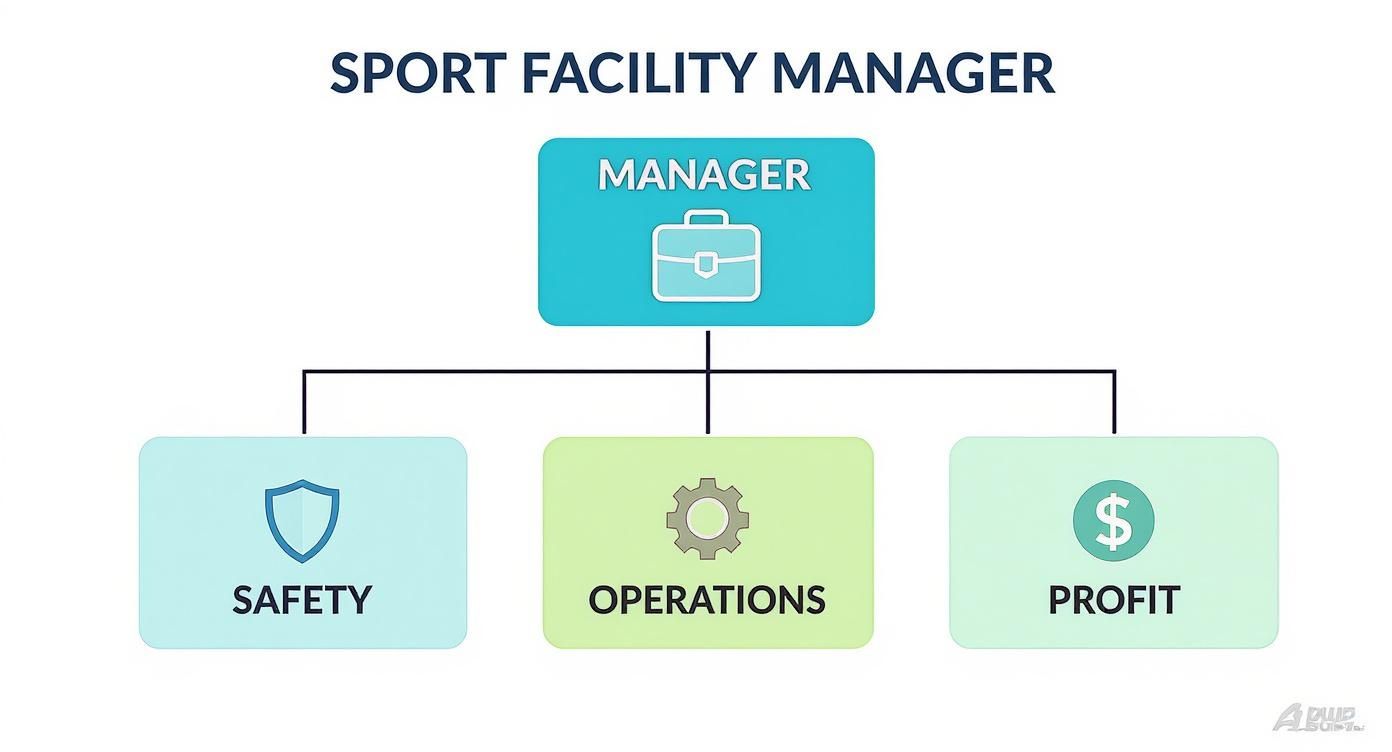
Think of it this way: every single decision, from scheduling court maintenance to running a holiday promotion, has to support these three pillars. It’s the only way to build a facility that’s both successful and built to last.
Let's unpack the key duties that bring these goals to life. The table below breaks down the manager's core responsibilities into the main operational areas they oversee daily.
| Area of Responsibility | Key Tasks | Success Metric Example |
|---|---|---|
| Financial Oversight | Budget management, expense tracking, identifying new revenue streams (leagues, events, sponsorships). | Achieving a 15% year-over-year increase in non-membership revenue. |
| Operations & Maintenance | Scheduling courts and events, managing staff shifts, overseeing preventive maintenance, ensuring safety compliance. | Maintaining a court/facility uptime of 98% or higher. |
| Community Engagement | Developing marketing promotions, managing social media, building partnerships with local businesses, handling member feedback. | Improving member retention rate from 75% to 85% within one year. |
| Team Leadership | Hiring and training staff, creating schedules, conducting performance reviews, fostering a positive work culture. | Reducing annual staff turnover by 20%. |
These aren't just separate to-do lists; they're interconnected parts of a single strategy. A happy, well-trained team leads to better member experiences, which in turn drives revenue and makes the financial side of things much easier to manage.
Financial Oversight and Strategy
At the end of the day, a sports facility is a business. The manager is its financial quarterback, tasked not just with balancing the books but with finding new ways to score. This means keeping a close eye on the budget, tracking everything from utility bills to payroll to make sure you’re not overspending.
But it’s not just about cutting costs. A huge part of the job is creativity—finding and growing different revenue streams. This could be anything from landing a big corporate sponsor for your summer league, optimizing your pro shop's inventory, or renting out a studio during off-peak hours for a local yoga class. The goal is to squeeze every drop of earning potential out of the facility to keep it financially healthy for the long haul.
A proactive sport facility manager doesn't just manage a budget; they treat every square foot of their venue as a revenue-generating asset, constantly looking for ways to improve its performance.
Operations and Maintenance Management
This is where the rubber meets the road. It’s all the behind-the-scenes work that keeps the facility running smoothly and safely for everyone, day in and day out. The manager is the master of the schedule, making sure court bookings, league matches, private lessons, and special events all fit together perfectly. A well-built schedule is the backbone of an efficient club.
Just as critical is the obsessive focus on upkeep and safety. This breaks down into a few key areas:
- Preventive Maintenance: You have to stay ahead of problems. This means regular, scheduled check-ups for everything from the HVAC system and court lighting to the nets and surfaces. It’s all about preventing that costly, unexpected breakdown.
- Safety Protocols: The manager must ensure the facility is up to code on all health and safety regulations. We're talking clear emergency exits, fully stocked first-aid kits, and proper incident reporting procedures.
- Daily Upkeep: This involves leading the cleaning and maintenance crews to guarantee the entire facility—from the locker rooms to the entrance—is spotless, professional, and welcoming for every single person who walks through the door.
Getting this right minimizes downtime, reduces liability, and protects the facility’s reputation.
Community and Brand Engagement
A sports facility truly succeeds when it becomes more than just a place to play—it becomes a community hub. A great manager is also the facility’s #1 brand ambassador, always working to build a positive reputation and forge real connections with members, local groups, and business partners.
It’s about more than just posting on social media. It means running promotions that get new faces in the door and planning events that create a genuine buzz. This could be partnering with local schools to host a youth clinic, teaming up with a nearby restaurant for a member appreciation night, or just being a visible, friendly face who listens to member feedback. A strong community is a loyal community, and that’s priceless.
Team Leadership and Development
Let's be clear: no manager can do this alone. A huge chunk of their time is spent building, leading, and motivating a top-notch team. It all starts with hiring the right people—from the front-desk staff who create the first impression to the coaches who keep members coming back.
Once the team is assembled, the manager’s job shifts to coach. This means providing great training, creating smart staff schedules to handle the busiest hours, and fostering a positive environment where people actually want to come to work. When you lead effectively, your whole team is on the same page, all working toward the same goal: giving every visitor an amazing experience.
01 / An open slot at 19:00. Players see it live in your club’s app.
The Skills That Set Great Managers Apart

Running a successful sports facility is about much more than just loving sports. It takes a special blend of technical know-how and real people skills. While knowing the nuts and bolts of your facility is the baseline, it's the combination of hard and soft skills that turns a good manager into a great one.
These skills are vital in today's crowded market. The U.S. indoor sports facilities management industry is a big deal—we're talking an estimated $1.7 billion in revenue for 2025, spread across more than 9,500 businesses. You can see more details on the state of indoor sports facilities at IBISWorld.com.
This growth means you need managers who can build a business that’s not just profitable but also safe, efficient, and genuinely welcoming. You need a leader who's just as comfortable digging into a P&L statement as they are calming down a frustrated member.
Let's get into the skills that really move the needle.
Hard Skills: The Technical Toolkit
Hard skills are the concrete, teachable abilities that keep the facility running smoothly. Think of them as the operational backbone of the entire business. A top-tier manager needs to have these down cold.
These are the skills you can measure, the ones directly tied to getting the job done day in and day out.
- Financial Acumen: This isn't just about balancing a checkbook. It's about building and managing budgets, forecasting revenue, and using financial data to make smart decisions that keep the facility healthy and growing.
- Software Proficiency: Modern venues run on technology. A manager has to be a pro with facility management software for bookings and scheduling, not to mention CRM systems and the usual office suite.
- Health and Safety Compliance: A deep, working knowledge of safety regulations is non-negotiable. This covers everything from having solid emergency plans to ensuring ADA compliance and keeping all equipment up to code.
A manager's ability to interpret data from their facility management software is directly linked to their ability to optimize court utilization, predict maintenance needs, and ultimately, drive revenue. It’s the story behind the numbers that counts.
Soft Skills: The Leadership Edge
If hard skills are the "what" you do, soft skills are the "how" you do it. These are the interpersonal skills that define how effective a manager is at leading a team, connecting with customers, and handling the curveballs that inevitably come their way.
Soft skills are tougher to pin down, but they're arguably what separates the truly exceptional leaders from the rest.
- Decisive Leadership: A pipe bursts right before a major tournament. A key staff member calls in sick. There’s no time to waffle. A great manager assesses the chaos, delegates with confidence, and makes the tough calls under pressure.
- Exceptional Customer Service: The manager sets the vibe for the entire facility. This means truly listening to what members are saying, handling complaints with empathy, and empowering the whole team to make everyone feel welcome. This applies to your staff, too—for example, understanding the specific needs of a yoga class instructor is crucial for their success and retention.
- Clear Communication: A manager has to be a chameleon communicator, able to give sharp feedback to an employee, present financial reports to owners, and explain a policy change to members—all with clarity and confidence.
- Creative Problem-Solving: The power goes out during a sold-out event. Now what? A skilled manager doesn't panic. They think on their feet, maybe sourcing backup generators or just communicating transparently with everyone to manage the situation. They turn a potential disaster into a moment of trust.
Building Your Facility's Tech Stack
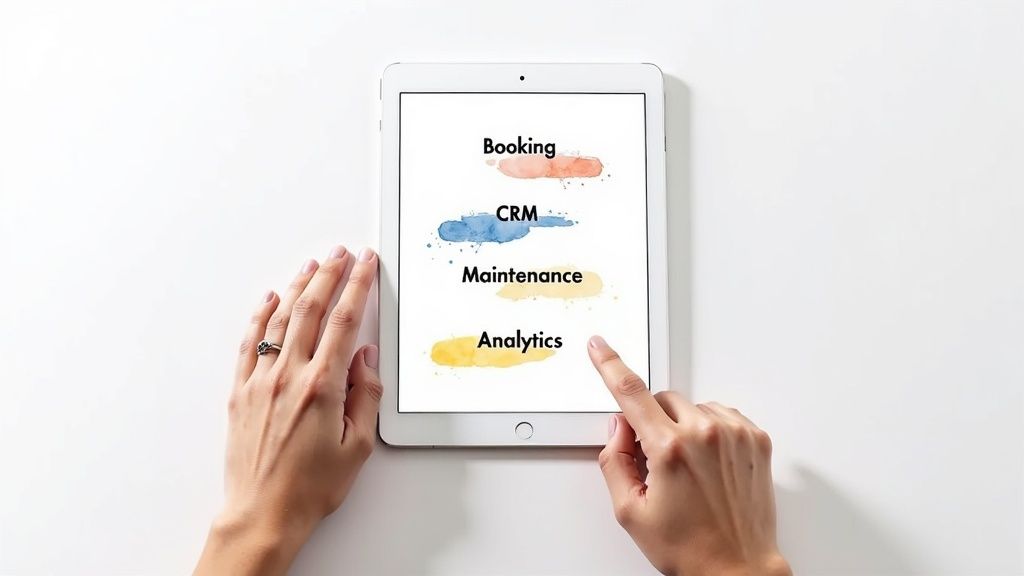
Today’s sports venues run on more than just talent and teamwork; they’re powered by smart technology. Picking the right software isn't a luxury anymore—it's the very core of a smooth, customer-focused operation. Think of your tech stack as the central nervous system of your entire facility, connecting everything from the front desk to the back office.
For a sport facility manager, this means finally ditching the clunky spreadsheets and disconnected apps. The real goal is to build an integrated ecosystem where every tool talks to the others. This automates the grind of daily tasks and gives you clear data to make smarter decisions, ultimately giving every member and guest a better experience.
Key Software Categories for Your Facility
Jumping into the software market can feel overwhelming, but most tools fit into a few key categories. The smartest facilities build their tech stack around a central platform and then plug in other specialized tools as needed. This approach creates a single, reliable source for all your operational data.
Here are the essential software types to get you started:
- Booking and Scheduling Platforms: This is the heart of your operation. Good booking software automates court reservations, class sign-ups, and event scheduling. It kills double bookings and helps you get the most out of every square foot of your space. Our guide on choosing the best tennis court reservation software has some great insights that apply to almost any sport.
- Customer Relationship Management (CRM): A CRM is your digital rolodex on steroids. It keeps track of member info, communication history, and how they engage with your club. This is your secret weapon for personalizing marketing and building a real community.
- Maintenance Management Software: Stop waiting for things to break. This software lets you get ahead of maintenance with scheduled checks, work order tracking, and equipment logs. It’s all about preventing problems and minimizing that expensive downtime.
- Payment Processing Systems: Getting paid should be easy and secure. Modern systems handle everything from monthly dues and drop-in fees to pro shop sales, often with automated invoicing and recurring billing built right in.
"Your tech stack should work for you, not the other way around. The right software frees you from administrative busywork, allowing you to focus on what truly matters: creating an exceptional experience for your community."
Your Software Selection Checklist
Choosing new technology is a big commitment. To make sure you pick a solution that actually fits your club, you need a structured game plan. A simple checklist can help you compare your options objectively and avoid common mistakes, like getting stuck with a system you’ll outgrow in a year.
Before you sign any contracts, walk through this checklist. It breaks down the critical things every sport facility manager should look for when vetting new software.
Software Selection Checklist for Sport Facility Managers
| Evaluation Criteria | Key Question to Ask | Why It Matters |
|---|---|---|
| Integration Capabilities | "Does this software connect with our existing tools for payments, marketing, and accounting?" | A system that integrates smoothly creates a unified workflow, prevents data silos, and saves your team from manual data entry. |
| Ease of Use | "How intuitive is the interface for both my staff and our members? Can we get a live demo?" | Complex software leads to low adoption rates. The platform should be easy for your team to learn and simple for members to use for bookings. |
| Scalability and Flexibility | "Can this platform support us as we add more courts, locations, or services in the future?" | Your software should be a long-term partner. It must be able to handle growth without requiring a costly and disruptive switch later on. |
| Mobile Experience | "Is there a dedicated, brandable mobile app for our members to use for bookings and communication?" | The modern customer expects to manage their life from their phone. A seamless mobile app is critical for member satisfaction and engagement. |
| Customer Support Quality | "What does your support system look like? Do you offer live help during our business hours?" | When issues arise, you need fast and reliable support. Good customer service minimizes operational disruptions and ensures you get the most value from the tool. |
Using a checklist like this turns a daunting decision into a clear, step-by-step process, ensuring the technology you choose becomes a true asset for your facility's growth.
How to Measure and Improve Performance
In facility management, the old saying hits the nail on the head: you can't improve what you don't measure. A data-driven approach is what separates a manager who's just putting out fires from a strategic leader who's building an empire. Relying on gut feelings is a surefire way to miss opportunities and watch your growth flatline.
The best managers use Key Performance Indicators (KPIs) to get a clear, objective snapshot of their facility's health. Think of KPIs as the vital signs of your business—they tell you exactly where you're winning, where you're falling short, and where to focus your energy for the biggest impact.
This isn't just a "nice-to-have." The global sports facilities market was valued at $132.4 billion in 2024 and is expected to rocket to $1,084.0 billion by 2034. That kind of explosive growth means competition is fierce, and only the sharpest, most data-literate managers will thrive. You can dig into more of this data over at the sports facilities market report on Market.us.
Financial KPIs: Your Bottom Line
Financial metrics are the most direct measure of your club's success. They cut through the noise and show whether your big ideas are actually translating into profit. A rock-solid grasp of these numbers is absolutely non-negotiable.
- Revenue Per Available Court/Hour (RevPAC/RevPAH): This is all about how effectively you're monetizing your main asset—the court time. It's calculated by dividing your total court revenue by the total number of hours your courts are available. It gives you a crystal-clear picture of your earning efficiency.
- Profit Margin: This is the ultimate health check. It reveals what percentage of every dollar you bring in is actual profit after all the bills are paid. A healthy margin means you have your costs locked down.
- Customer Acquisition Cost (CAC): How much do you have to spend on marketing and sales to get one new member through the door? Tracking your CAC ensures your marketing budget is a true investment, not just another expense line.
To get a better handle on what you could be earning, tools like a specialized revenue calculator for sports facilities can help you project income based on different scenarios.
Operational KPIs: Engine Room Efficiency
While financial KPIs track the results, operational KPIs measure the engine that produces those results. They give you a look under the hood at the day-to-day efficiency of your facility, helping you spot bottlenecks and smooth out workflows before they hurt the customer experience or your bottom line.
A utilization rate tells a story. A low rate might signal a marketing problem, while an extremely high rate could be a warning sign of staff burnout and potential maintenance backlogs.
Here are the operational metrics you need to watch:
- Facility Utilization Rate: What percentage of the time are your courts or studios actually booked and in use? A high utilization rate is a fantastic sign of strong demand and smart scheduling.
- Maintenance Response Time: When a member reports a broken net or a leaky faucet, how fast does your team jump on it? Quick response times are critical for safety and keeping members happy.
- Staff Turnover Rate: This number reflects how happy your team is and how effective your leadership is. High turnover is expensive, a headache to manage, and can seriously disrupt the member experience.
Customer-Centric KPIs: The Voice of Your Community
Last but certainly not least, you have to measure the happiness and loyalty of your members. A profitable facility with unhappy customers is a house built on sand. These metrics help you listen to your community and build relationships that last.
- Member Retention Rate: This is the percentage of members who renew their subscriptions over a set period. It’s one of the most powerful indicators of long-term health, because keeping a member is way cheaper than finding a new one.
- Net Promoter Score (NPS): This classic metric gauges loyalty by asking one simple question: "How likely are you to recommend our facility to a friend?" The answer gives you a clear score that you can track over time to see how your community really feels about you.
Frequently Asked Questions About the Role
So, you're thinking about a career in sports facility management? It’s a dynamic field, but it naturally brings up some big questions about career paths, what you can expect to earn, and the realities you'll face day-to-day. Getting a handle on these key areas gives you a much clearer picture of what you’re signing up for long-term. Let's dig into some of the most common questions.
A sport facility manager doesn’t just walk into the top job. The role is the destination of a journey, one built on a solid foundation of hands-on, operational experience.
What Is a Typical Career Path in Facility Management?
The path often starts right on the ground floor, where you learn the nuts and bolts of daily operations. Think roles like an operations coordinator, a front-desk supervisor, or an events assistant. These jobs are your bootcamp—they provide that essential, real-world experience in customer service, scheduling, and basic maintenance, laying the groundwork for everything that comes next.
From there, you'll likely step up into a departmental manager role, like an Operations Manager or an Events Director. Here, you start taking ownership of specific areas, managing small teams, and getting your hands dirty with budgets. Once you’ve proven you can handle that, the path typically leads to a general manager or facility director position, where the entire operation is your responsibility. And for the really ambitious? The ultimate goal could be a regional director role, overseeing multiple venues for a larger organization.
What Is the Average Salary for a Sport Facility Manager?
This is the million-dollar question, or perhaps the fifty-thousand-dollar one. A sport facility manager's salary can swing pretty wildly based on a few key things: the facility's scale, its location, and of course, your level of experience.
Here’s a simple breakdown of how it works:
- Facility Type and Size: Running a massive, multi-sport stadium for a pro team is going to bring in a much bigger paycheck than managing a local community tennis club.
- Geographic Location: It’s no surprise that salaries are usually higher in major cities where the cost of living—and the demand for top talent—is greater.
- Years of Experience: Someone fresh in an entry-level management spot will start at the lower end. A seasoned pro with a track record of boosting revenue and running a tight ship can command a much higher income.
As a general rule of thumb, salaries can range from around $50,000 for managers at smaller clubs to well over $100,000 for those at the helm of large, bustling venues.
What Are the Biggest Challenges You Will Face?
Let's be real: while it’s an incredibly rewarding job, being a sport facility manager isn’t always a walk in the park. The best managers are masters of creative problem-solving and can keep a cool head when things get chaotic.
One of the biggest juggling acts is balancing a tight budget while still making sure every customer has a top-notch experience. This means getting creative with cost savings without ever compromising on maintenance or service quality. Another major challenge is navigating the natural highs and lows of seasonal demand, figuring out how to keep the facility profitable even during those quieter off-season months.
And then there's the unexpected. A power outage during a sold-out event, a crucial piece of equipment failing right before a big match—you name it. The ability to think on your feet and roll out a backup plan is what truly separates a good manager from a great one.
Ready to get a handle on these challenges and streamline your operations? Book & Go provides a complete, white-label platform to manage bookings, scheduling, payments, and member engagement, all in one place. See how leading clubs are building better experiences.