If your club is still running on paper logbooks and endless phone calls, it's time for an upgrade. Moving to a digital system for booking badminton court slots isn't just a small tweak—it's a fundamental shift in how you operate. It’s the first real step toward a more efficient, profitable, and player-friendly facility.
Why Your Facility Needs a Digital Booking System

Let's be honest, moving away from old-school booking methods is about more than just looking modern. It's about fixing real operational headaches and unlocking potential you didn't know you had.
The biggest win? You get your staff’s time back. Instead of being chained to the phone or front desk, they can focus on what really matters—engaging with members, coordinating coaching, and actually improving the facility.
This switch immediately improves the player experience, too. Members can see exactly what’s available and book a court in seconds, whether they're at home or on the go. This isn't a luxury anymore; it's what players expect, and it's key to keeping them happy and coming back.
Boosting Revenue and Utilization
A good digital system is a powerful tool for your bottom line. By simply requiring online prepayments, you can slash the revenue you lose from no-shows and last-minute cancellations. It’s a small change that ensures every booked court is a committed, paid-for slot.
Beyond that, you can finally get smart with your pricing. Think about implementing things like:
- Peak vs. Off-Peak Rates: Charge a premium for those busy evening and weekend slots, but offer a discount to fill the courts on a quiet Tuesday morning.
- Member-Specific Pricing: Give your loyal members a better deal or an exclusive booking window. It’s a great way to encourage long-term commitment.
- Block Booking Discounts: Make it easy for groups who want to book the same court for weeks at a time with automated special pricing.
The goal here is to stop thinking of your schedule as static and start seeing it as a dynamic revenue generator. When you can analyze booking data, you can spot patterns and tweak your pricing to keep your courts as full as possible, turning those quiet hours into income.
Meeting Modern Player Demand
The demand for accessible sports is exploding. In Singapore, for example, badminton court bookings soared to a ten-year high in 2023, hitting around 961,760 reservations. That's a huge jump from the previous year. You can dig into the numbers yourself with these recent badminton market statistics.
This trend sends a clear message: facilities that offer an easy, efficient booking experience are the ones that will capture this growing market.
2. Picking the Right Badminton Court Booking Software
The booking software you choose can either be your club's greatest asset or its biggest recurring headache. Let's be honest, the market is flooded with options, and cutting through the marketing fluff is key. You're not just buying a piece of software; you're choosing a partner in your day-to-day operations.
The very first test for any platform? Its user experience—not just for your members trying to book a court on their phone, but for your staff behind the desk. If a system is clunky or confusing, it creates friction. Friction leads to frustrated players and overwhelmed staff. A great system should just feel right from the moment you log in.
What Really Matters: The Core Features
Before you even glance at a price tag, you need a crystal-clear checklist of your must-haves. Think about the quirks and specific needs of your facility. Do you have different rates for peak hours? Do you need to block out courts for junior coaching clinics or routine maintenance?
Here’s what I've found to be the absolute non-negotiables when you're comparing your options:
- A Mobile-First Design: It’s 2024. A huge chunk of your players will book courts from their phones, probably while sitting on the couch or on their lunch break. The process has to be fast, simple, and completely reliable on a small screen.
- Truly Flexible Scheduling: Can the system actually handle your specific rules? Put it to the test. See if you can set up peak vs. off-peak pricing, recurring block bookings for leagues, and maybe even some members-only time slots on a Saturday morning.
- Built-in Payments: Taking payments online is the single best way to dramatically reduce no-shows. It's a game-changer. Make sure the system works with trusted, secure payment gateways your members will recognize.
- Solid Membership Management: Look for software that can handle your different membership tiers (e.g., student, family, individual), automate renewals, and apply discounts at checkout without any manual work.
If you want to get into the nitty-gritty of technical capabilities, checking out a comprehensive list of features for booking software can give you a solid benchmark for what to look for.
One of the biggest mistakes I see clubs make is choosing a system based on a flashy sales demo. Insist on a free trial and set it up with your actual court layout and pricing. Make test bookings. Create a complicated schedule. See how it performs under pressure before you commit.
Table: Key Features in Badminton Court Booking Software
As you start your search, it helps to separate the absolute essentials from the features that are just nice extras. This table breaks down what you should prioritize to ensure your daily operations are covered, versus the enhancements that can take your club to the next level.
| Feature Category | Must-Have Functionality | Nice-to-Have Enhancement |
|---|---|---|
| Scheduling | Real-time court availability, recurring bookings, and easy cancellation/rescheduling. | Waitlist functionality for popular time slots, and automated court allocation. |
| Payments | Secure online payments via credit card, with clear financial reporting for staff. | Support for digital wallets (Apple Pay/Google Pay), and automated invoicing. |
| Member Mgmt | Different membership tiers with unique pricing, and a central member database. | Self-service member portal for updating details and viewing booking history. |
| Communication | Automated booking confirmations and reminders via email or SMS. | Push notifications for promotions, and a built-in announcements feature. |
| Staff Tools | A clear admin dashboard, tools for manual bookings, and user permission levels. | Point-of-Sale (POS) integration for pro-shop sales or snack bar purchases. |
Ultimately, your "must-have" list will be unique. But starting with this framework ensures you cover the fundamentals before getting wowed by advanced bells and whistles.
Understanding the Price Tag
Software pricing can be a minefield, but it usually boils down to a few common models. Getting a handle on these helps you forecast your costs and avoid nasty surprises down the road.
A flat monthly subscription is predictable and great for budgeting. A per-booking fee might look attractive, but it can get expensive if you're a busy facility. Exploring platforms that specialize in this space, like the ones you might find on ShareMySaaS digital booking solutions, can give you a good sense of the market rates.
At the end of the day, the right software should save you far more in administrative time and increased court usage than it costs. Don't just look at the price; consider the total value it brings to your club.
01 / An open slot at 19:00. Players see it live in your club’s app.
Setting Up Your Court Schedules and Pricing
Okay, you’ve picked your software. Now comes the fun part: translating your physical facility into a digital, bookable asset. This isn’t just about data entry; it's about strategically setting up your courts, hours, and pricing to squeeze the most value out of every minute your facility is open.
First up, think about each court’s unique character. Is Court 1 your premium show court with professional lighting? Maybe Court 4 has a slightly faster surface that experienced players love. These little details matter. Adding them to your system gives players more information and gives you a reason to price certain courts differently down the line.
Getting this foundation right is what separates a clunky system from one that works like a well-oiled machine.
Building an Intuitive Court Schedule
Your schedule is the heart of your booking system. If it’s confusing, people will just give up and call you—or worse, go somewhere else. The goal here is absolute clarity.
Start by blocking out your standard opening and closing times for each day. Once that skeleton is in place, you can start layering on the things that make your facility’s schedule unique.
- Maintenance Blocks: Are the courts deep-cleaned every Monday morning? Block off 6 AM to 7 AM so nobody can book them. This prevents headaches later.
- Coaching Sessions: If a coach has exclusive rights to Court 2 on Tuesday and Thursday afternoons for private lessons, reserve it for them in the system.
- League Play and Events: Got a weekly league that takes over four courts every Wednesday night? Block them off as a recurring event. Doing this for one-off tournaments is also a must.
This infographic breaks down how choosing the right software from the start makes managing all these moving parts so much easier.
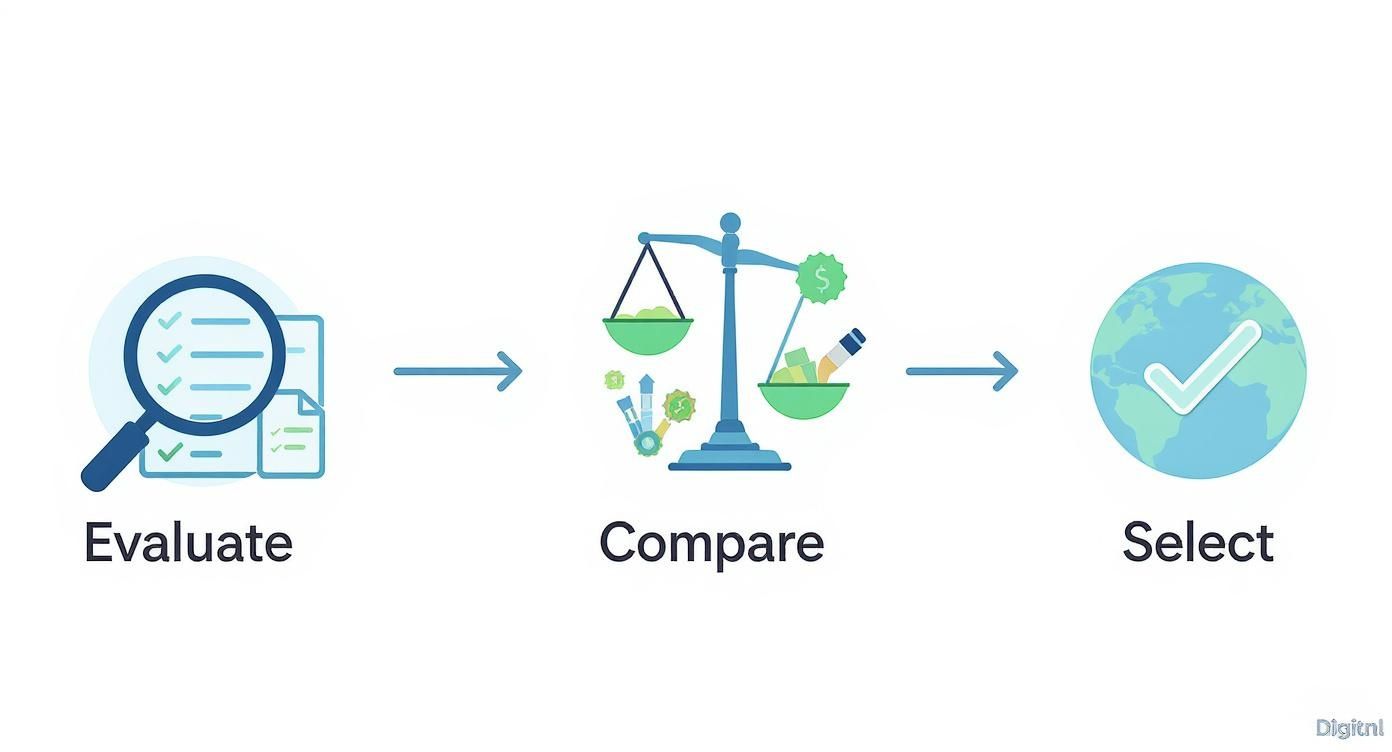
As you can see, a powerful system lets you manage all these different layers without creating a scheduling nightmare. It’s worth exploring the different types of scheduling calendars good software offers to find one that visualizes your facility’s week perfectly.
Implementing a Smart Pricing Strategy
Your pricing is more than just a number; it’s your most powerful tool for influencing when people play. A flat, one-price-fits-all model is a surefire way to leave money on the table. You need to think dynamically.
The easiest and most effective place to start is with peak vs. off-peak pricing. You know when you’re busiest—probably weekday evenings from 6 PM to 10 PM and weekend mornings. Those are your prime-time slots, and they should have a premium price tag. On the flip side, you can offer a nice discount for those quieter times, like mid-day on a Tuesday, to tempt people into filling those empty courts.
A club I worked with had courts sitting completely empty from 10 AM to 1 PM on weekdays. They rolled out a "Lunchtime Shuttle" special offering 40% off the normal rate. Within a month, court usage during that dead zone tripled, bringing in revenue that literally didn't exist before.
Beyond just the time of day, you should also create pricing tiers for different types of players. This is a fantastic way to build loyalty and drive membership sales.
- Standard Non-Member Rate: Your baseline price for anyone walking in off the street.
- Member Rate: A solid discount (think 25% off) makes membership feel valuable.
- Junior/Student Rate: A cheaper price to get younger players in the door, especially during off-peak hours.
- Bulk Booking Discounts: Sell a 10-pack of court hours at a slightly reduced price. It gets you cash upfront and locks in player commitment.
When you start combining these strategies, your schedule for booking badminton court times transforms from a simple grid into a smart tool that actively drives revenue and helps you make better business decisions.
Here is the rewritten section, crafted to sound human-written and natural, following all the provided guidelines and examples.
Integrating Payments and Managing Memberships
A great booking tool is so much more than a digital calendar. It's the operational heart of your facility, especially once you weave payments and memberships directly into it. The moment you connect a payment gateway like Stripe, you stop just scheduling courts and start securing revenue.
Taking online prepayments is the single best thing you can do to kill no-shows. It's a simple psychological shift—when players have already paid for their slot, their commitment level skyrockets. This one step transforms a casual reservation into a confirmed transaction, dramatically cutting down on the lost income from those last-minute cancellations that leave courts sitting empty.
From there, the real power comes from building and managing your membership tiers right inside the software. This is where you start building real loyalty and creating predictable, recurring revenue you can count on.
Automating Membership Perks and Renewals
Imagine offering your members real, automated benefits that actually make them feel valued. Instead of your staff manually tracking who gets what discount or special privilege, the system just handles it.
This makes it incredibly easy to set up perks people will love, like:
- Exclusive Booking Windows: Let your members book courts a full week or two before non-members can even see the schedule.
- Special Member Pricing: Automatically apply a discount—say, 20% off peak hour rates—every single time a member books. No fuss.
- Court Credits: You could offer premium membership packages that come with a set number of free court hours each month.
The goal here is to move past a simple discount and create a true VIP experience. When the software handles all the logic, your staff is freed from playing police, letting them focus on providing great service instead of trying to remember a bunch of complex rules.
This kind of automation can cover the entire membership lifecycle. The system can send out automatic renewal reminders, process recurring payments, and update a member's status without anyone lifting a finger. For facility managers, this means fewer administrative headaches and a much clearer picture of your future revenue. For a deeper look at how this works, it's worth exploring the tools available in a modern back-office management system like Book & Go.
Tapping into a Growing Market
Getting these features dialed in doesn't just make your life easier; it positions your facility to capitalize on the sport's explosive growth. The global badminton racquet market was valued at a whopping $1.2 billion in 2023 and is projected to hit $1.9 billion by 2032.
A huge factor driving this growth is simply accessibility. Modern booking systems are making it easier than ever for new players to find and reserve courts. You can see the full breakdown in this comprehensive badminton market analysis.
By offering a seamless payment and membership experience, you make it frictionless for both dedicated players and total newcomers to get on your courts, ensuring you capture your share of this expanding market.
Growing Revenue with Lessons and Events

Your booking platform is so much more than just a scheduler for courts; it's a powerful engine for growth. Once you move beyond standard rentals, you can tap into significant new revenue streams by managing coaching services, clinics, and tournaments—all through the same system your members already know and use.
Centralizing everything this way creates a completely seamless experience. Instead of members calling the front desk or chasing down a coach to find a time, they can see all your offerings in one place. This convenience doesn't just boost sales; it solidifies your facility as the go-to hub for all things badminton in your area.
Empowering Coaches and Simplifying Bookings
Start by giving your coaches their own profiles within the system. This is a game-changer. It allows them to set their specific availability, which members can then browse and book directly online. A coach who only works Monday and Wednesday evenings can have their schedule reflect that perfectly, which completely eliminates the risk of double-bookings or frustrating mix-ups.
This setup puts both your members and your coaching staff in control. Members can find and book a lesson that fits their schedule in seconds, while coaches get a professional, organized way to manage their clients without the constant back-and-forth texts and calls.
You can create a whole menu of different offerings to meet player needs:
- One-on-One Private Lessons: The classic coaching session, easily bookable in 30 or 60-minute slots.
- Group Clinics: Set up weekly beginner clinics or advanced drills sessions with a firm cap on capacity.
- Specialty Workshops: Host a weekend workshop on improving smash technique or footwork, and manage every single registration online.
By putting all these services into your booking software, you transform it from a simple utility into a full-fledged marketplace. A player booking a court for Friday might see a pop-up for a Saturday morning clinic and decide to sign up on the spot. You're capturing impulse buys that would have otherwise been missed.
Managing Tournaments and Events Seamlessly
We’ve all been there—organizing a club tournament or a holiday event often means messy spreadsheets and manually tracking down payments. Your booking software can handle all of it. Just create the event, set the entry fee, define the number of participants, and let players register and pay online. Done.
This doesn't just save you a massive amount of administrative effort; it also gives you a clear, real-time view of registrations as they happen. Some of the more advanced systems can even help manage brackets and send automated updates to participants.
Think bigger than just events, too. You can use these tools for payroll, easily tracking how many hours each coach has worked and calculating their earnings automatically. This level of integration is what solidifies your platform as the true core of your entire business operation.
Get Ready for Launch: Going Live and Using Your Data
You’ve done the hard work, and your new badminton court booking system is ready to go. This is a huge step, but the launch itself is more than just flipping a switch. The real measure of success is getting your members on board without a hitch, turning a potential headache into a welcome upgrade.
The secret is a smooth, phased rollout. Don't spring it on them overnight. Start communicating early and often with email newsletters and signs around the club. Create simple, visual guides that walk them through creating an account and booking their first court. It's also a great idea to have a tablet at the front desk so your staff can personally guide anyone who isn't as comfortable with technology.
Spreading the Word
When you announce the change, frame it entirely around the benefits for your players. This isn’t about a new admin tool; it’s about giving them the power to book a court whenever they want, 24/7, without having to call or wait.
A simple go-live checklist will keep you organized:
- Two-Week Head Start: Send the first announcement email a couple of weeks before launch day.
- Final Reminder: Follow up with another email a few days before you go live.
- Visible Reminders: Plaster your facility with posters and flyers. A QR code that links directly to the new booking page is a fantastic touch.
- Empower Your Team: Make sure every single staff member knows the new system inside and out. They are your front-line support and need to answer questions with confidence.
Once you're live, you need to get people using the platform. It's worth looking into a few solid strategies to attract organic traffic to keep the bookings flowing.
From Data to Decisions
Once the initial launch buzz dies down, your new system shifts from a booking tool to a powerful business intelligence engine. The reporting and analytics features are where the real magic happens. You can finally stop guessing and start making decisions based on cold, hard facts.
Don't get overwhelmed. Just start by tracking a few key metrics. Your court utilization rate is the big one—what percentage of your available hours are actually being booked and paid for? Keep an eye on popular booking times to confirm your real peak hours (they might surprise you!) and track member activity to identify your most loyal, frequent players.
Data is useless if you don't act on it. Start asking questions. If court bookings are dead on Tuesday afternoons, could a "Mid-Week Mashup" promotion fill those empty slots? If Court 4 is always the last to be booked, is there a problem with the net or the lighting that needs to be fixed? This is where you find the gold.
This data-driven approach is becoming essential. The global badminton facilities market is projected to hit $2.472 billion by 2025. Harnessing your own data is what will keep you competitive and ensure your club isn't just surviving, but thriving.
Of course. Here is the rewritten section, designed to sound natural, human-written, and aligned with the provided expert style.
Common Questions We Hear All the Time
Switching to a new system for booking your badminton courts always brings up a few questions. That's perfectly normal. Over the years, we've heard them all, so I've put together some straightforward answers to the most common things that come up when facility managers start this journey.
These aren't just generic answers; they address the real-world concerns you have, from budgeting for the software to making sure every last member feels comfortable with the new setup.
What’s the Real Cost of Booking Software?
The price tag on booking software can swing quite a bit, so it's smart to know what you're looking at. Many platforms run on a flat monthly fee, which can be anywhere from $50 to over $200. This usually depends on the number of courts you have and which features you need, but it's great for keeping your budget predictable.
Then there are systems that charge per booking or take a small percentage of each transaction. If your court usage ebbs and flows with the seasons, this might look appealing. But be careful—if you're running a busy club, those small fees can add up and end up costing you more than a simple flat rate. The best move is to run the numbers on your average monthly bookings and see which model actually saves you money.
Can This Actually Work With My Existing Website?
Yes, absolutely. Any modern booking platform worth its salt is built to plug right into your current website. It's one of the most important features. Most will give you a simple widget or a small snippet of code that you can pop directly onto a page.
What this does is create a completely seamless experience for your members. They can see the schedule and book a badminton court without ever feeling like they've left your site. It keeps your branding front and center and just makes the whole process feel intuitive.
My Pro Tip: Before you sign anything, always insist on seeing a live demo of the website integration. A good system should look and feel like it’s always been a part of your site, not some clunky, tacked-on tool.
How Do We Get Our Less Tech-Savvy Members On Board?
This is a big one, and the key is a gentle transition, not a hard switch. It’s all about support and a bit of patience. You don’t have to force everyone online from day one.
For the first few weeks, keep taking bookings at the front desk like you always have. The only difference? Have your staff use the new system to make those bookings right in front of the member. It's a low-pressure way to show them just how quick and easy it is.
You could also print up some simple, large-font guides with screenshots and leave them on the counter. Maybe even host a casual 15-minute tutorial session one evening. You'll find that once most members try it for themselves, they quickly fall in love with the convenience of booking their favorite court from their own couch.
Ready to give your members the seamless booking experience they deserve? Book & Go offers a fully-brandable app and a powerful back-office system to manage your courts, payments, and lessons without the headache. See how we can help your club thrive at https://www.bookandgo.app/en.