Pickleball group lessons aren't just about hitting a ball back and forth. They're structured training sessions where players learn skills, drills, and strategies together, all guided by a professional coach. Done right, they create a social, cost-effective, and incredibly dynamic learning environment for everyone, from first-timers to seasoned competitors.
Designing Pickleball Lessons Players Love

A great pickleball program is built long before anyone steps on the court. It starts with a smart, thoughtful design focused on clear goals and real, tangible progress for your players.
The goal here is to move past simply offering "court time with a coach." You're creating an experience that feels structured, valuable, and genuinely fun. This is how you turn a one-time drop-in into a loyal member of your pickleball community.
And the demand for this kind of structured learning is exploding. Pickleball’s insane growth in the United States, which saw participation hit an estimated 22.7 million players by mid-2025, has created a massive audience hungry for quality instruction. That staggering 311% growth in just three years signals a huge market need for well-designed entry points—like group lessons—where new players can build confidence and connect with others. You can dive deeper into the data on this incredible growth and what it means for the sport.
Defining Your Lesson Structure
First things first: you absolutely have to segment your lessons by skill level. A one-size-fits-all approach is a recipe for frustration. A clinic designed for a total beginner will feel painfully slow for a 3.5 tournament player, and vice-versa.
Think about creating clear pathways for your players. Your core programs might look something like this:
- Intro to Pickleball Clinic: A 90-minute, one-off workshop. Cover the absolute essentials: rules, basic strokes, and where to stand. The goal is pure introduction and confidence-building.
- Beginner Drill & Play Series: A 4-week series that focuses on one core skill per week (think dinking, third-shot drops, volleys) and finishes with guided gameplay. This is all about building a solid foundation through repetition.
- Advanced Strategy Session: A drop-in class for your experienced players. This is where you dig into complex topics like stacking, poaching, and specific offensive/defensive patterns. The focus shifts from "how" to "why."
By creating these distinct programs, you’re catering to the entire player journey, from their very first swing to their first tournament win.
I've found the sweet spot for a well-structured lesson is dedicating roughly 60% of the time to active drilling and 40% to situational gameplay. This balance lets players practice a new skill in isolation before immediately having to use it in a game-like context, which really makes the learning stick.
Crafting a Compelling Curriculum
For any multi-week series, a clear, written curriculum is non-negotiable. It shows players exactly what they're going to learn and justifies their investment of time and money. It’s your program’s roadmap.
Below is a sample structure you can adapt. It lays out a clear progression and ensures players know what to expect each week, which builds trust and keeps them coming back.
Sample Group Lesson Curriculum Structure
| Week | Beginner Focus (Learn to Play) | Intermediate Focus (Drill & Play) | Advanced Focus (Strategy Clinic) |
|---|---|---|---|
| Week 1 | Rules, Scoring, Basic Dinks & Serves | Third-Shot Drops & Transition Zone | Offensive Stacking & Poaching |
| Week 2 | Forehand/Backhand Groundstrokes & Volleys | Volley Resets & Defensive Blocking | Pattern Play & Shot Selection |
| Week 3 | Court Positioning & Basic Rallying | Aggressive Dinking & Creating Openings | Countering Bangers & Fast Hands |
| Week 4 | Putting It All Together: Guided Gameplay | Playing with a Purpose: Point Construction | Advanced Serve/Return Strategies |
A clear plan like this demonstrates professionalism and provides a consistent experience no matter which coach is leading the session.
So, what does a single class look like? For a typical 60-minute intermediate lesson, a balanced structure might be:
- Warm-up & Skill Intro (10 mins): Dynamic stretching, then the coach demonstrates the day's focus—let's say it's the cross-court dink.
- Cooperative Drills (20 mins): Players partner up for non-competitive drills to really build that muscle memory without pressure.
- Competitive Drills (15 mins): Now, the coach introduces a game-based drill that forces players to use that new skill under a bit of pressure.
- Guided Play & Cooldown (15 mins): End with short games where the coach provides real-time feedback and strategic advice.
This simple framework provides consistency and ensures every minute on the court is spent productively. This is how your pickleball group lessons become the most sought-after offering in town.
Strategic Scheduling And Smart Pricing
How you schedule and price your pickleball lessons is more than just logistics—it’s the engine that drives your profitability and defines who can access your programs. A smart schedule meets player demand without causing court conflicts, while strategic pricing keeps your club competitive and financially healthy.
The demand for structured pickleball instruction is absolutely booming. In 2024, the pickleball lessons market was valued at an impressive USD 1.42 billion, and that number is only climbing as the sport's player base explodes. While the U.S. is a major hub, international growth is surging with participation up by 40% globally in just three years. This isn't just a trend; it's a clear, worldwide appetite for quality instruction. You can explore the full pickleball market trends to see just how big this opportunity really is.
Building A Schedule That Works
Your schedule is the backbone of your entire lesson program. One of the biggest mistakes I see clubs make is only offering lessons during those peak evening hours. That approach might seem logical, but it completely alienates huge segments of your potential audience.
Instead, think about your different player demographics and build a schedule that caters to them.
- Weekday Mornings (9-11 AM): This is a goldmine for retirees, stay-at-home parents, and anyone with a flexible work-from-home schedule.
- Lunchtime Power Hour (12-1 PM): Perfect for the working professionals nearby who want to squeeze in a high-intensity drill session on their break.
- After-School Slots (4-6 PM): This is your prime time for junior programs, which is one of the fastest-growing segments in pickleball.
- Prime Time Evenings (6-9 PM): Of course, you still need to serve the traditional after-work crowd.
- Weekend Mornings: These are high-demand slots for literally everyone, making them ideal for special clinics or multi-week series.
By offering this kind of variety, you maximize your court usage and open the door for so many more players to join your pickleball group lessons.
A simple scheduling trick is to create 'program blocks.' For instance, maybe every Tuesday morning is dedicated to your 'Beginner Series,' while Thursday evenings are locked in for 'Advanced Drill' sessions. This creates a predictable rhythm that members can easily plan their lives around.
Setting Prices For Profitability And Growth
Your pricing model has to strike that perfect balance between being accessible for players and profitable for your club. A single, flat rate for everything is a missed opportunity. A tiered approach is far more effective and gives players more control.
Before you set any prices, you need to calculate your break-even point for each class. Don't forget to factor in everything: coach pay, the cost of court time (even if you own them, there's an opportunity cost), and any administrative overhead. Once you know your baseline costs, you can build a smart pricing structure on top of it.
Here are three popular models that work well:
- Per-Session Drop-In: This offers maximum flexibility, which some players love, but it can lead to unpredictable attendance for you. Price this option the highest to incentivize commitment to larger packages.
- Multi-Class Packages: This is a classic for a reason. Selling bundles of 5, 10, or 20 classes at a discounted per-session rate is fantastic for locking in revenue and encouraging players to keep coming back.
- All-Inclusive Memberships: For your most dedicated players, offer unlimited group lessons for a flat monthly or annual fee. This model is the holy grail for creating loyal members and predictable, recurring revenue.
The key is to make the value at each level crystal clear. Someone buying a 10-class package should feel like they’re getting a great deal compared to the drop-in rate.
Not sure what your potential earnings could look like? Don't just guess. You can use this handy revenue calculator to model different pricing scenarios and forecast your program’s financial success. This data-driven approach turns your pricing from a shot in the dark into a real strategy.
01 / An open slot at 19:00. Players see it live in your club’s app.
Building Your All-Star Coaching Team

Let's be honest: the success of your group lessons comes down to the person leading them. A truly great coach does more than just teach a third-shot drop. They build confidence, create a community, and design an experience that has players buzzing long after they leave the court.
Assembling this all-star team is maybe the most important thing you'll do. It's what turns a decent program into an unforgettable one.
So, where do you find these people? Start in your own backyard. Your club's most dedicated and talented players are often your best coaching prospects. They already get your club's vibe and have a built-in rapport with members. Beyond that, start looking at local pickleball social media groups and make connections with tournament directors in your region.
Vetting Your Instructors
When you're sizing up a potential coach, their playing skill is just the ticket to the dance. It's not the whole show.
Certifications from groups like the Professional Pickleball Registry (PPR) or the International Pickleball Teaching Professional Association (IPTPA) are a huge plus. They show a coach is serious about their craft and has a solid foundation in proper technique and teaching methods.
But the real magic is in the soft skills. A fantastic group coach needs to have:
- Top-Notch Communication: Can they explain a complex dink strategy in a way that just clicks for a total beginner?
- Patience and Empathy: They need to be able to encourage a frustrated player while also pushing the more advanced person in the same group. That’s a delicate balance.
- Group Management Skills: Keeping a class of 4-8 people all engaged, active, and safe is a real skill. Everyone needs to feel like they got their money's worth.
When it comes to the interview, I always recommend getting them on the court. Ask them to run a 15-minute mini-lesson for a few people. You'll learn more about their personality and teaching style in that quarter-hour than you ever will from a resume.
A coach with a Level 1 certification and incredible people skills will almost always create a better group lesson than a 5.0-level player who can’t connect with beginners. Invest in personality and passion—you can always build on their technical knowledge.
Ensuring Consistency and Quality
To keep the quality high across all your pickleball group lessons, you need a bit of a playbook. I recommend creating standardized lesson plans for your core classes, like "Intro to Pickleball" or a "Beginner Drill & Play" series.
This doesn't mean you script every word a coach says. Far from it. It just provides a clear framework of the skills and drills to be covered each week.
This simple step ensures that a player gets a consistently great experience, no matter who's coaching. It also gives your pros the perfect blend of structure and freedom, letting them adapt to the specific players in front of them. It's a system that empowers your team and protects your brand.
Marketing Your Lessons And Filling Every Spot
A brilliantly designed program doesn't mean much if your courts are empty. Moving from a great idea to a fully booked schedule takes a smart, consistent marketing effort. This is your playbook for getting the word out and making sure every single spot gets filled.
It all starts with how you talk about your lessons. Don't just list the time and price; sell the experience. Instead of a dry "Beginner Pickleball Lesson," try something like, "Learn to Play Pickleball in 90 Minutes: Go from Zero to Rallying with Confidence!" Use vibrant, action-oriented language and show, don't just tell. High-quality photos or short videos of your lessons in action are gold for your website, social media, and booking pages.
Building Your Promotional Calendar
Effective marketing isn’t a one-and-done blast. It’s about creating a steady drumbeat of communication that keeps your lessons top of mind. A simple promotional calendar is your best friend here. I always recommend mapping out your key messages at least a month in advance.
Your calendar should hit a mix of channels to reach different parts of your audience:
- In-Club Promotion: Never underestimate the power of your own four walls. Put up posters, leave flyers at the front desk, and, most importantly, have your staff personally mention upcoming lessons to members. This is your warmest, most receptive audience.
- Email Newsletters: Your regular member newsletter is prime real estate. Dedicate a section to highlight new lesson series, shine a spotlight on your instructors, and share success stories or testimonials from past participants.
- Social Media Content: Post a dynamic mix of content—think short drill videos, quick tips from a coach, and clear calls-to-action to register for your pickleball group lessons. Use platforms like Instagram and Facebook to showcase the fun, social vibe of your classes.
Building a genuine community is one of the most powerful marketing tools you have. When players feel connected to each other and your club, they become your most passionate advocates. For a masterclass in this, check out how Jungle Padel built their amazing community in Bali.
Tactics That Drive Registrations
Once you've laid the groundwork, you can start layering in specific tactics to create a sense of urgency and drive immediate sign-ups. You need to give people a compelling reason to register now, not later.
The Referral Incentive: This one’s a classic for a reason. Offer current participants a 10% discount on their next lesson package for every new player they refer who signs up. Word-of-mouth is incredibly powerful, and this just adds fuel to the fire.
Another tactic I've seen work incredibly well is creating scarcity with early-bird discounts. Announce a limited-time discount for the first week of registration. It encourages people to stop procrastinating and helps you fill a good chunk of your spots right out of the gate, giving you a much clearer picture of your enrollment numbers early on.
Finally, you have to make it easy for people who aren't already members to find you. To make sure your pickleball lessons are visible to the wider community, you should look into some proven local SEO strategies. This is what helps your club pop up in local search results when potential players are looking for a place to learn.
And trust me, the potential audience is massive. By 2023, an estimated 50 million adults in the U.S. had already tried pickleball, creating an enormous market for structured learning. This group is also increasingly diverse, with male players making up about 60.5% and females 39.5% of the base. Your marketing needs to appeal broadly to capture this wide-ranging interest.
Streamlining Operations With The Right Tech
Let’s be honest, you didn’t get into this business to chase payments or untangle scheduling conflicts. A great lesson program can easily get torpedoed by the sheer weight of administrative work—endless phone calls, messy spreadsheets, and tracking down payments.
This is where a modern booking platform isn't just a nice-to-have; it's your most valuable player.
The right tech shifts you from constantly reacting to proactively planning. It takes over the repetitive, soul-crushing tasks, freeing you and your coaches to focus on what actually matters: delivering a fantastic experience on the court. Think of it as the central nervous system for a scalable, professional, and profitable lesson program.
Non-Negotiable Platform Features
When you're vetting a new system, a few features are absolutely non-negotiable for running smooth group lessons. Without these, you're just creating more work for yourself down the line.
A solid platform absolutely must have:
- Integrated Calendars: Your court availability and your coaches' schedules need to sync up in real-time. This is the only way to kill the dreaded double-booking that throws your staff into chaos and leaves players frustrated.
- Automated Waitlists: For your popular classes, an automated waitlist is a lifesaver. The second a spot opens up, the system should ping the next person in line and give them a chance to book. This keeps your classes full with zero manual effort from you.
- Secure Online Payments: Requiring pre-payment online is a game-changer. It nearly eliminates no-shows and gets rid of that awkward on-court payment shuffle. Coaches can start on time, every time.
This infographic breaks down how technology can simplify the whole process, from the initial idea for a lesson all the way to getting players signed up and paid.
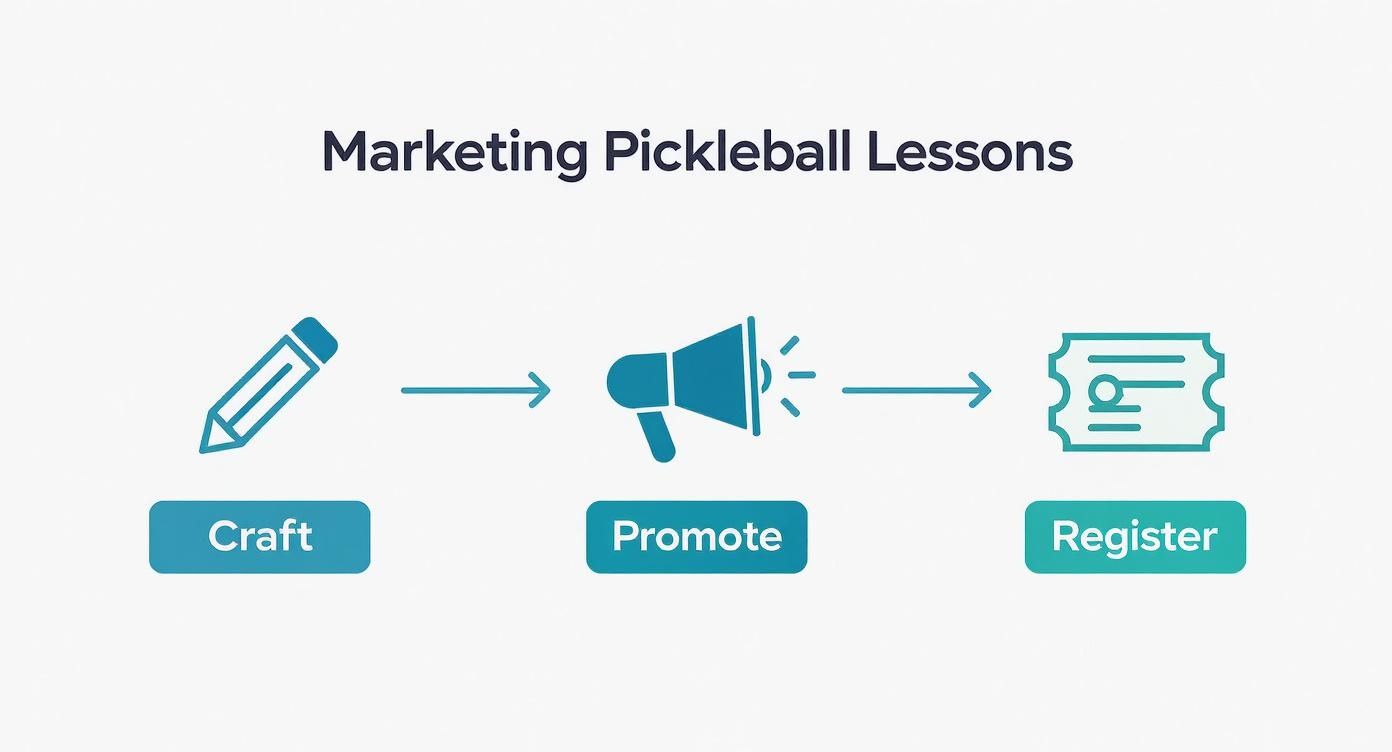
As you can see, the right software connects program creation, promotion, and registration into one seamless workflow.
If you want to dive even deeper, check out this guide on the smart booking systems features that matter to make sure you pick a platform that actually helps your club grow.
Using Data To Grow Intelligently
One of the biggest wins of using modern software is the data. Your booking platform is a goldmine of insights that can help you stop guessing what works and start knowing.
Your platform's reporting tools let you track the metrics that really tell the story of your program's health. You'll want to keep a close eye on these KPIs:
Fill Rate: This is simply the percentage of available spots that were booked. A consistently high fill rate is a great sign that you've found a sweet spot with your offerings and marketing.
Revenue Per Class: Dig in and see which lessons, coaches, and time slots are your biggest money-makers. This is the data that should drive your schedule and pricing optimizations.
Player Retention: How many players are coming back for more? This is your single best indicator of player satisfaction and the quality of your coaching.
Don't overlook the power of automated confirmations and reminders, either. They're not just a professional touch; they've been shown to cut down no-shows by as much as 40%.
To take it a step further, think about integrating small business marketing automation to keep your communication consistent and timely. By leaning into technology, you build a program that's not just efficient, but resilient and ready for whatever growth comes next.
Got Questions? We’ve Got Answers.
As you get your pickleball programs humming along, you're bound to run into a few recurring questions. Let's tackle some of the most common ones we hear from managers and coaches in the trenches.
What's the Magic Number for Student-to-Coach Ratio?
This is a classic, and the honest answer is: it depends. The real goal is to strike a perfect balance between personal feedback and keeping everyone moving. You never want players just standing around.
For your beginner clinics, where you're really drilling down on the fundamentals, a ratio of 4-6 students per coach on one court is the sweet spot. This lets the instructor get hands-on with grips, footwork, and basic strokes without anyone getting lost in the shuffle.
When you're running drills for intermediate or advanced players, you can absolutely open it up to 8 students per coach, often using two courts side-by-side. These players can feed balls to each other and keep drills moving with less direct hand-holding on every shot. The coach becomes more of a facilitator, correcting form and strategy as needed.
How Do You Handle a Mix of Skill Levels in One Class?
Ah, the dreaded mixed-skill-level class. It’s a challenge every coach faces. Your first and best line of defense is to get ahead of it during sign-ups. Using a simple rating system (like 2.5, 3.0, 3.5) in your booking software can solve this problem before it even starts.
But when it does happen, a sharp coach knows how to adjust on the fly.
- Differentiate the Drills: In a dinking drill, you might give a beginner the simple task of "getting 10 in a row over the net." For the more advanced player right next to them, the challenge becomes "vary the depth and placement of every dink." Same drill, different objectives.
- Use Smart Game Formats: "King of the court" or challenge-style games are your best friend here. Players naturally self-sort by skill level, leading to more competitive and enjoyable matches for everyone involved.
The real art of coaching a mixed group is setting individual goals within a collective activity. Everyone should walk off the court feeling like they were both supported and pushed to get a little better.
What Numbers Should We Actually Be Tracking?
To know if your program is truly thriving, you have to look beyond just headcounts. A few key performance indicators (KPIs) will tell you the real story and give you the data to make smart decisions.
Don't overcomplicate it. Just focus on these three:
- Class Fill Rate: What percentage of your available spots are actually booked? This is your #1 signal for demand and tells you if your marketing is working.
- Revenue Per Class: This number helps you pinpoint your most profitable offerings. You might discover your 9 AM beginner clinic is a cash cow, while the evening advanced drill session needs a rethink.
- Student Retention Rate: What percentage of players sign up for another class or clinic? This is the ultimate report card on player satisfaction and the quality of your coaching.
Most modern club management platforms can spit out these reports for you, turning a sea of data into clear, actionable insights.
Should We Really Require Pre-Payment Online?
Let me be direct: Yes. Absolutely. 100%.
Requiring players to pay online when they book isn't just a nice-to-have feature; it's a non-negotiable business practice. It locks in your revenue and makes life easier for everyone.
Think about it. When players have skin in the game, your no-show rate plummets. It also completely eliminates the awkward on-court fumbling for cash or credit cards, which means your coaches can start on time and focus on what you pay them to do: coach.
Ready to streamline your scheduling, automate payments, and get the data you need to grow your pickleball program? Book & Go provides a powerful, white-label platform that simplifies every aspect of club management.
Discover how Book & Go can transform your club's operations today.